09 Sep. 2026
Regenagri’s Annual Report highlights the regenerative agriculture programme’s global growth, uptake and impact in 2025.
Founded in 2020 as a Community Interest Company (CIC), Regenagri’s regenerative agriculture programme is designed to secure the health of the land and the wellbeing of those who live on it. In 2025, the programme expanded to cover a land area of more than 2,300,000 hectares globally, an increase of 16% on the previous year.
Read Regenagri’s 2025 Annual Report
Global uptake gathers pace
Alongside the global increase in land area, the number of supply chain companies certified to Regenagri supply chain standards also increased substantially to 2,278 in 2025, an increase of just over 80% compared to 2024, driven by the increased adoption of Regenagri by brands and retailers. The Regenagri programme also welcomed farms from three new countries in 2025 – Uganda, Uzbekistan, and Zambia.
See all uptake results
Positive progress in farming practices
In 2025, Regenagri programme data showed encouraging improvements in farming practices globally. The share of Regenagri-certified farms adopting natural crop protection rose 5.6 percentage points globally from 19.3% to 24.9%. Meanwhile, the average number of biodiversity practices per farm rose by 15% from 2.04 to 2.34.
Regenagri not only tracks changes in individual farming practices but also their wider environmental impacts. This work will be further strengthened later this year with the publication of a Life Cycle Assessment (LCA) conducted by an independent third party to provide additional insight, including greenhouse gas emission data and other key indicators.
See all impact results
Case studies provide on-the-ground insight
Throughout 2025, Regenagri-certified farms demonstrated the remarkable impact of regenerative practices:
- In Türkiye, Agrita Tarım’s six-year transition helped its Söke operations withstand droughts and floods, while natural fertiliser use rose from 33% of NPK in 2022 to more than 80% in 2025.
- In Tanzania, Alliance Ginneries’ programme trained 30,000 cotton farmers in climate-smart practices such as cover cropping, minimal tillage and soil building.
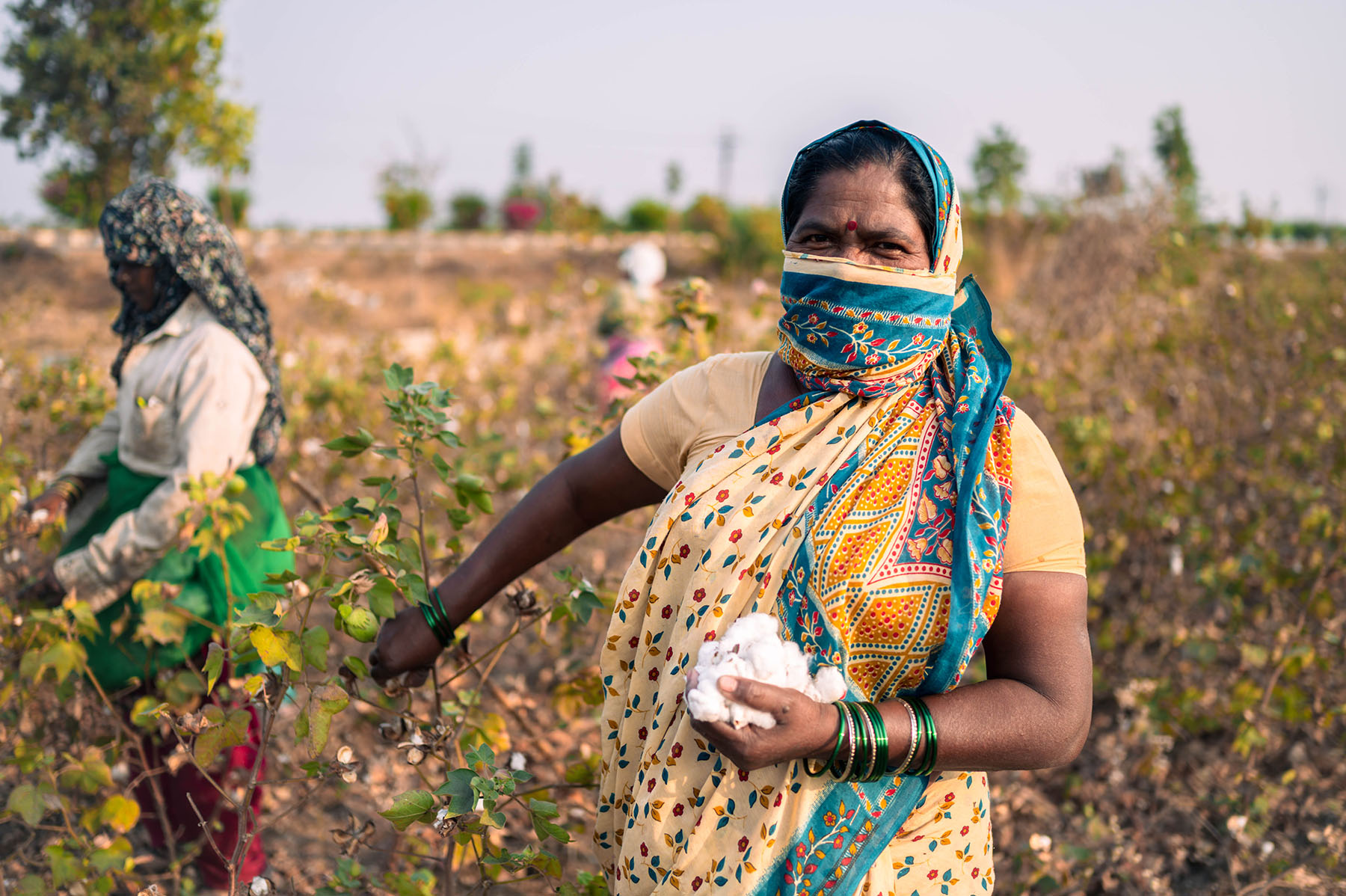
- In India, farmer Narayan Santosh Choudhary increased cotton yields from 1.7 to 2.4 tonnes on the same 1.4 hectares using practices including vermicompost, crop diversification and biodigester-generated fertiliser, while more than doubling his net income.
See all case studies
Launching the Carbon Insetting Programme
Launched in January 2025, Regenagri’s Carbon Insetting Programme helps farmers increase income while enabling brands to address their Scope 3 emissions. By the end of 2025, the programme covered 358,593 hectares across 8 countries and 5 continents, spanning 30 crops.
In November, Regenagri launched the accompanying Carbon Insetting Platform to provide secure access to programme data and carbon unit transactions. Together, they are working to turn regenerative farming improvements into measurable value for farmers and businesses.
Learn more about the Carbon Insetting Programme
Scaling the regenerative transition through partnerships
Recognising the importance of collaboration in driving widespread transition to regenerative farming, 2025 was a year of nurturing relationships. We became the lead partner in the Regenerative Organic Alliance’s Journey to ROC™ pilot programme and welcomed the International Cooperative Alliance as a board member. We also expanded our NGO partnerships, working with WWF-Pakistan to bring 180 more farms on board, and WWF-India and Solidaridad to support smallholder farmers, bringing an additional 1 million hectares under the Regenagri programme.
Franco Costantini, CEO of Regenagri says:
“I am delighted to share Regenagri’s 2025 Annual Report, showcasing the continued growth of our programme and the encouraging progress of Regenagri-certified farms around the world.
“Over the past year, we have continued to strengthen the rigour and integrity of the programme, while expanding our reach and deepening collaboration across our global network. The results highlighted in this report clearly show the power of regenerative farming to restore nature, soil health and improve farm resilience.
“The progress we see across our global network is driven by the farmers, businesses and partners working together to transform agriculture from an extractive system to a regenerative one. We’re proud to share their achievements and to support the global transition to regenerative farming to secure a more resilient future.”
Regenagri’s upcoming Life Cycle Assessment (LCA), conducted by an independent third party, will be published later this year to complement the data provided in the 2025 Annual Report, covering all 16 environmental impact categories of the EU’s Product Environmental Footprint (PEF) methodology. It will also provide GHG emission data and emission factors for cotton and coffee at both country and global levels.
Read Regenagri’s 2025 Annual Report

 English
  German
  Italian
  Portuguese
  Hindi
Hindi  Romanian
  Hungarian
  Ukrainian
  French
  Spanish
  Chinese