15 10 月 2026
Supporting rural women in Egypt to produce more sustainable cotton
To mark International Day of Rural Women and highlight the vital role these women play in creating more sustainable cotton supply chains, we spoke with Prof. Abeer Samir Arafa, Deputy Director for Research at the Cotton Research Institute, Agricultural Research Center (ARC) about her work with women within the Regenagri programme in Egypt.
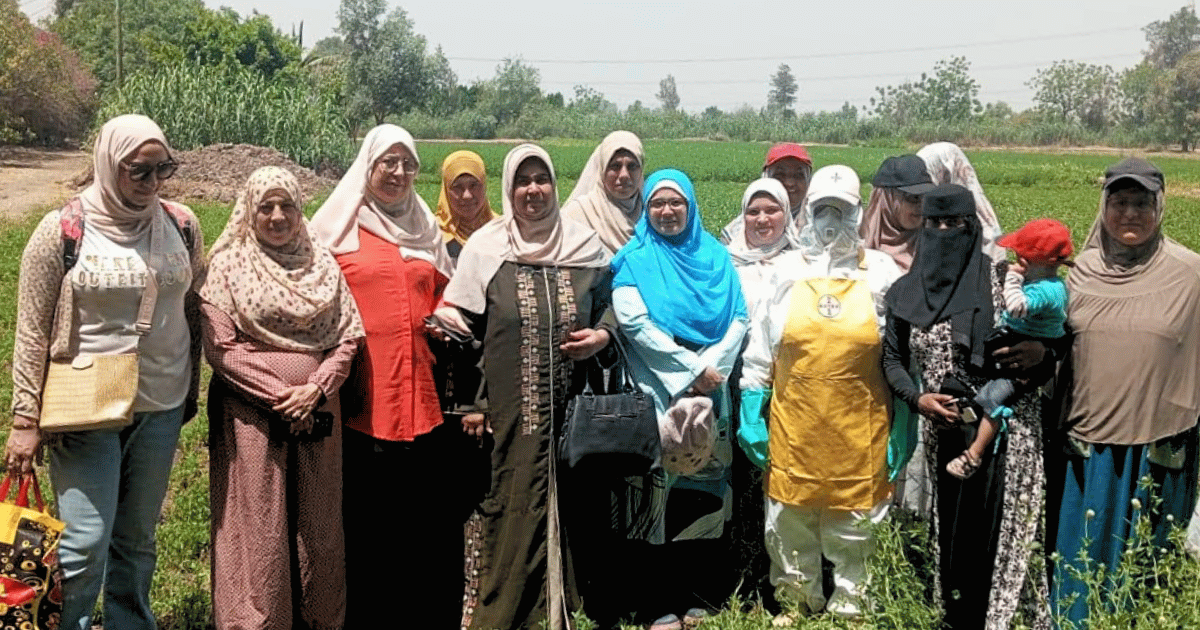
Photo by El-Agouzain Cooperative.
With an increase in global demand for sustainably certified cotton, Prof. Abeer Samir Arafa and her team implemented a financial inclusion and occupational health and safety programme designed to support rural women to produce cotton in a safer and more sustainable way. Here she explains the programme.
Women play a vital role in cotton production; they participate in all agricultural operations equally with men, from planting to harvest.
As many women are heads of their households, we focused on their needs specifically.
Supporting rural women is not just about empowering women, it is about securing the future of sustainable Egyptian cotton. When a woman learns, the whole family learns, and the whole farm becomes safer and more sustainable.”
At the start of the Regenagri regenerative agriculture programme, we conducted interviews with farmers and a training needs assessment to identify key topics women wanted support with.
Our interviews and assessments revealed that women needed more knowledge on how to deal with banks, understand financial transactions, and access loans.
This is crucial because many women are responsible for their families. We contacted national banks to help with financial literacy, financial inclusion, and digital payment.
The Occupational Health and Safety training was conducted by the Plant Protection Research Institute, Agricultural Research Center. It covered:
- Protective clothing and safety measures
- Safe disposal of containers
- Symptoms of poisoning and how to prevent it
- Types of pesticides and correct application methods.
The training increased awareness not only among women but also their husbands and children.
This is documented in the Farmer’s Booklet and inspected. This improvement was visible during the verification.
Women are now more aware of financial transactions and financial inclusion. However, we’ve found that women need more training on microfinance, small and medium enterprises, and incubators.
The Regenagri Farms Standard helped us a lot through its assessment and inspection systems to ensure results.
Its traceability and verification system was a key to ensuring implementation and measure impact. It helped us enforce the use of personal protective equipment, safe disposal, and financial literacy, and to document all of this.
As a result of applying the standard, we also organised first aid training in a hospital and transferred it to farmers.
Find out more about Regenagri’s certification programme and how it could support your transition to regenerative agriculture.

 English
 German
 Italian
 Portuguese
 Hindi
 Romanian
 Hungarian
 Ukrainian
 French
 Spanish
 Chinese